
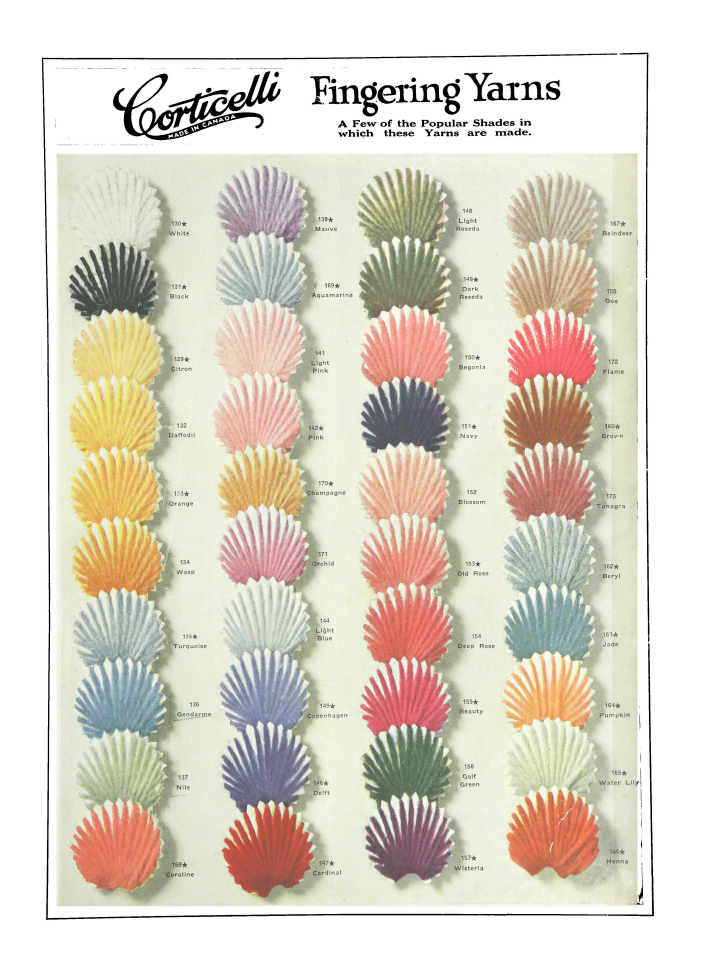

Excerpt from the Corticelli Knitting Book No. 1
Toronto Public Library Archives
As an avid knitter, sometimes you have to balance the desire to create with the amount of closet space available to you... I find that asking friends and family if I can knit for them gives me the opportunity to work on my craft and not have to worry about where, oh where, I will store the thing. I was recently asked to knit a WWI cardigan for a friend, and the experience raised some interesting questions about the use of colour in historical handknits and personal knitting in the early 20th century - a small exploration I present to you here.
Generally speaking, there was a LOT happening in knitting culture at this point in time - The First World War shifted a lot of domestic work into voluntary war work, and knitters across Canada were encouraged to use their skills to knit for the war effort. During my research for A Knitted History of Osgoode Township, I came across a number of newspaper opinion pieces in The Winchester Press newspaper that seemed to show disdain for personal knitting. Yet, we have relatively abundant archival remains of knitting booklets that advertise personal styles. This discrepancy in discourse could also be reflective of a rural culture - The Winchester Press newspaper, being the central source, represents a rural Ottawa demographic. Perhaps concerns around where limited disposable income was spent (on yourself or on the war effort) underpinned the complaints. Newspapers like The Ottawa Citizen, on the other hand, representing an urban Ottawa population, tend to have longer articles focused on organized women's groups and their accomplishments in war work. Articles supporting women's ongoing war war efforts were also recognized in the rural newspapers as well.
[1] Shirley Scott, Canada Knits: Craft and Comfort in a Northern Land (McGraw-Hill Ryerson, 1990), 85.
[2] National Relief Committee, Spring 1918 War Work: Containing Official Instructions for Red Cross Supplies, and Soldiers' and Sailors' Comforts, Spring, 1918 (Toronto, 1918), 16.
[3] Eatons Fall and Winter Catalogue, 1913-1914 (Toronto, T. Eaton Co, 1913), 56A.
Endnotes
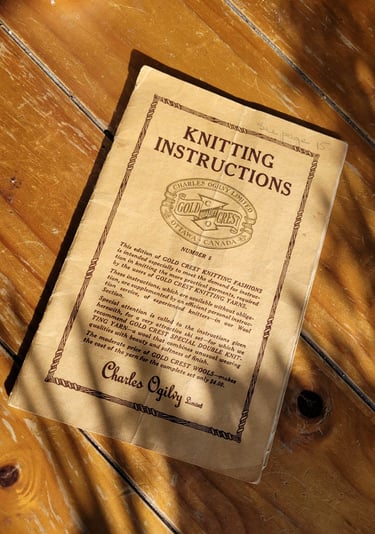
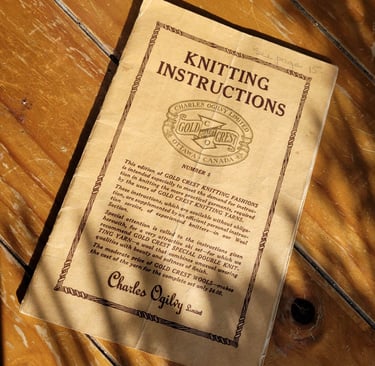
Another interesting aspect is that despite the general decline in knitting popularity in the 1920s, yarn companies and stores began publishing knitting patterns. Canadian yarn manufacturers realized that knitting booklets were essential for the promotion of yarn offerings and increased product sales [1]. In fact, one of the earliest knitting booklets I have in my personal collection is from the Ottawa department store Ogilvy's, published in 1926.
As for the cardigan project itself, the pattern I used was "Violet's Jacket" from Centenary Stitches, a WWI knitting book published in tandem with Crow's Eye Production's short series, Tell Them of Us. The original pattern was called the "Suburban Jacket," though no source is given for the original pattern and publication date. The construction method was new to me and quite brilliant - the whole sweater is knit in one piece and sewn at the underarm and side seams, with the pockets, collar and buttons added later. This knit up relatively quickly in worsted-weight yarn, though I ran into some issues with the yardage estimates and some pattern errors/areas that would benefit from more clarity.
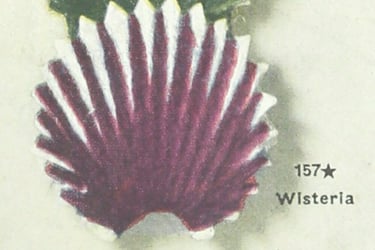
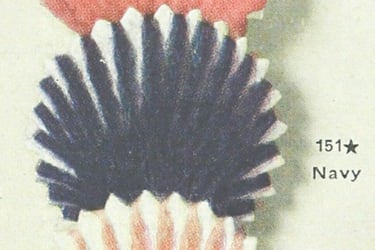
When it came to deciding colours, the recipient wanted green, purple and navy. Extant examples of knit sweaters from this period show all types of colours, but a stand out source for me was the Corticelli Knitting Book no. 1 from 1920 (see my earlier point about pattern publications in the 1920s). While slightly after the suspected period of the original sweater pattern, the black and
white booklet includes a full colour plate advertising their most popular shades (with the implication that there's perhaps more...). Based on these options we can very clearly see that knitters in the early 20th century would have had an abundance of colours to choose from. This would have been a stark contrast to the requested colours for wartime knitting - endless gray, khaki and navy. In the case of socks especially, the use of coloured yarn was effectively banned for fear of dye leaking into open wounds or blistered feet [2]. Gray for the socks and military branch colours like khaki and navy would have been the word of the day.
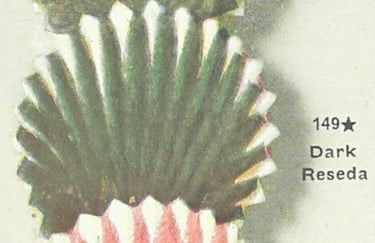
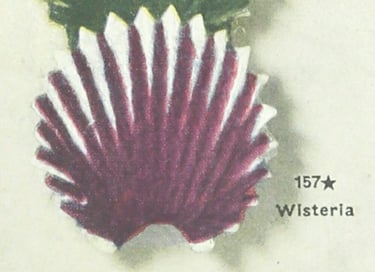
Based on this chart, the final garment colours most closely resemble "Dark Reseda" as the Main Colour (MC), "Wisteria" as Contrast Colour One (CC1) and "Navy" as Contrast Colour Two (CC2).
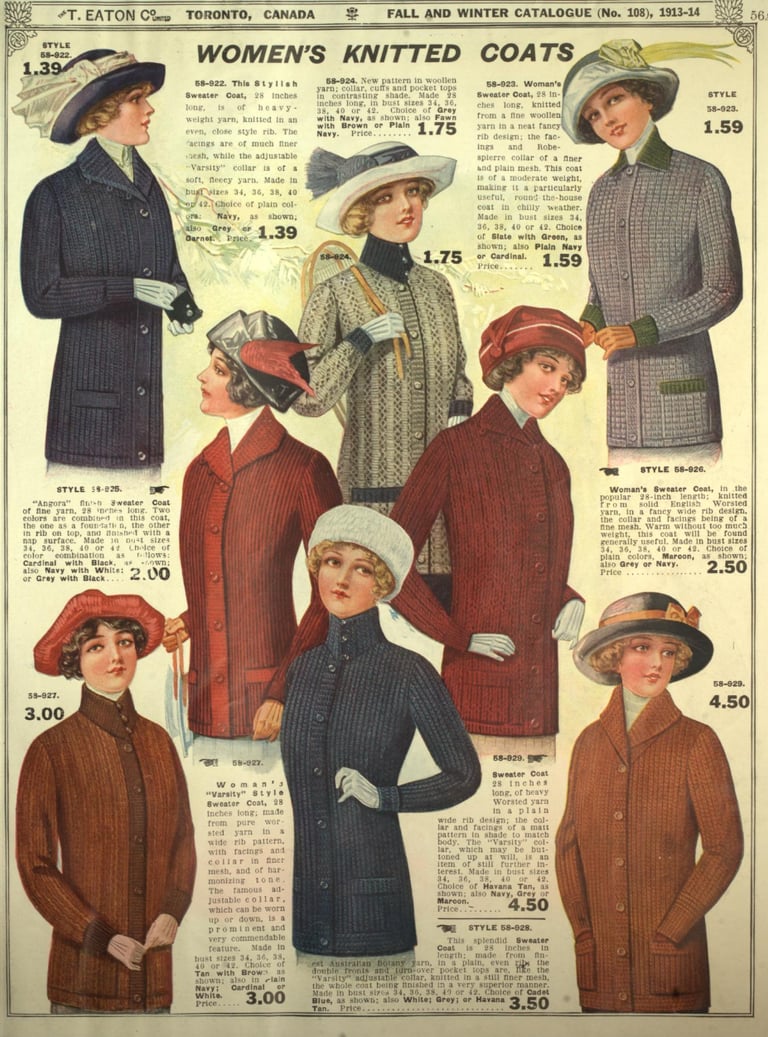
Women's Knitted Coats Spread from Eaton's Catalogue, 1913-1914
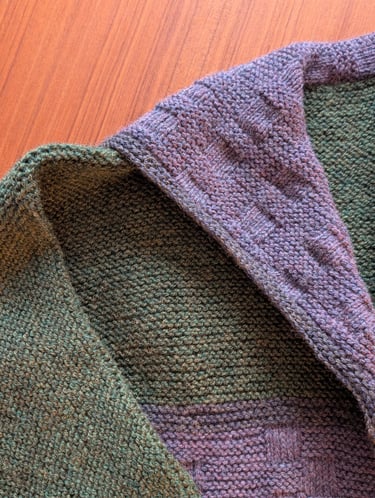
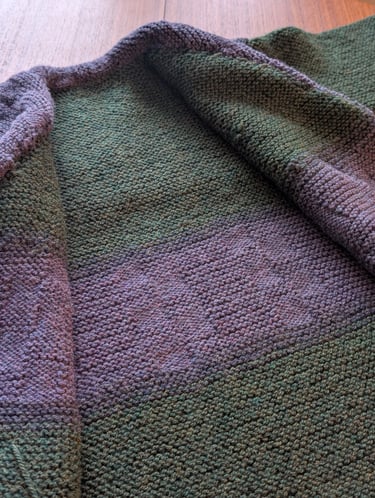
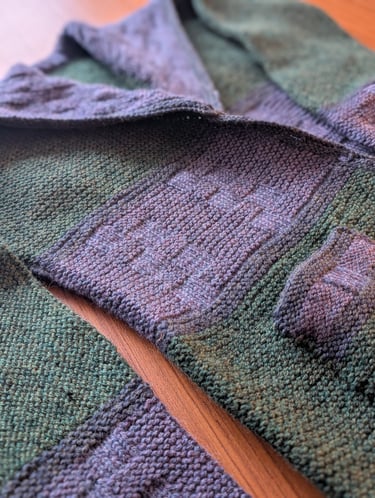
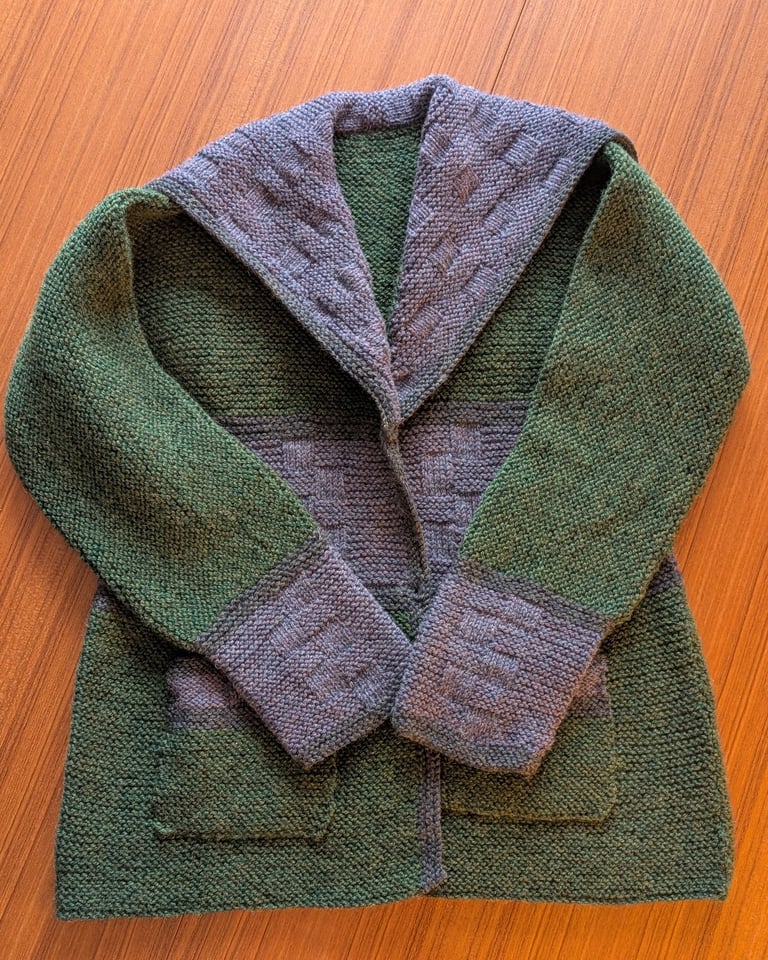
Detailed images of the final sweater, February 2026
Where possible, I also like to consult the Eaton's Catalogue, as many of them are digitized and later editions include colour plates like the one below. In contrast to the knitting pattern booklets, this type of source provides more insight into the premade commercial market and what colours may have been in demand. For this 1913-1914 edition we primarily see cognac/rust/reddy brown as the most popular option, followed by navy, and white or gray with contrast cuffs and collars tied for third place [3].
Overall, this short dive into colour sources only opens the door for me to ask more questions, especially with regards to the offerings from Canadian wool manufacturers (Monarch I'm looking at you!).